
Program Notes: Choral Festival 2026
August 03, 2026
- August 03, 2026
Program Notes: Choral Festival 2026
 John Koegel
Professor of Musicology
California State University, Fullerton
Maurice Duruflé’s Requiem
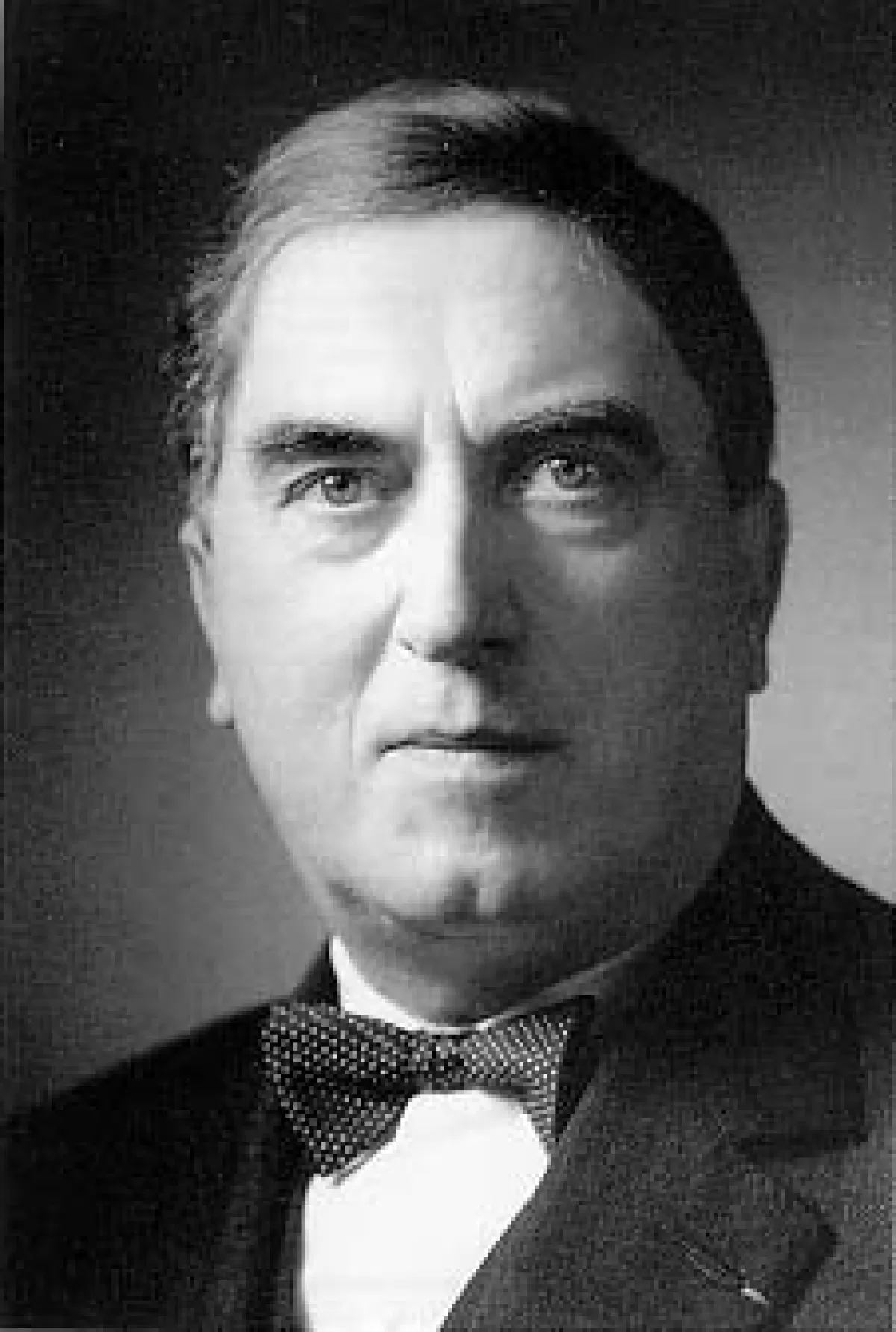 French composer, organist, and teacher Maurice Duruflé’s (1902-1986) compositional output was not large, but his masterpiece the Requiem is one of the beloved, essential works in the choral repertory. It takes its place alongside Gabriel Fauré’s frequently performed Requiem, and both works share a common approach to setting the text of the Catholic Mass for the Dead. Although both Duruflé and Fauré set the Libera me (Deliver me, Lord) text in which the Day of Judgement is foretold, they both principally focus on the hopeful supplicant’s plea that God grant the faithful an eternal, peaceful rest after death, and this fervent desire is deeply reflected in their music.
Maurice Duruflé showed such fine musical potential that he was admitted at age ten as a boy chorister to Rouen Cathedral choir school, where he received his formal musical and general education up to age sixteen. At Rouen he regularly sang in cathedral services, in which the performance of Latin-texted plainchant was an essential element of the liturgy and was a strong influence later in his own composition. He also deputized at the cathedral organ for his teacher Jules Haelling, a pupil of the renowned French organist Alexandre Guilmant. Duruflé moved to Paris in 1919 to study organ with Charles Tournemire and Louis Vierne in preparation for the entrance examinations for the Paris Conservatoire. Duruflé enjoyed great success at the Paris Conservatoire, which he entered in 1920, winning first prizes in five categories: organ (1922), harmony (1924), fugue (1924), accompaniment (1926), and composition (1928), the last under Paul Dukas.
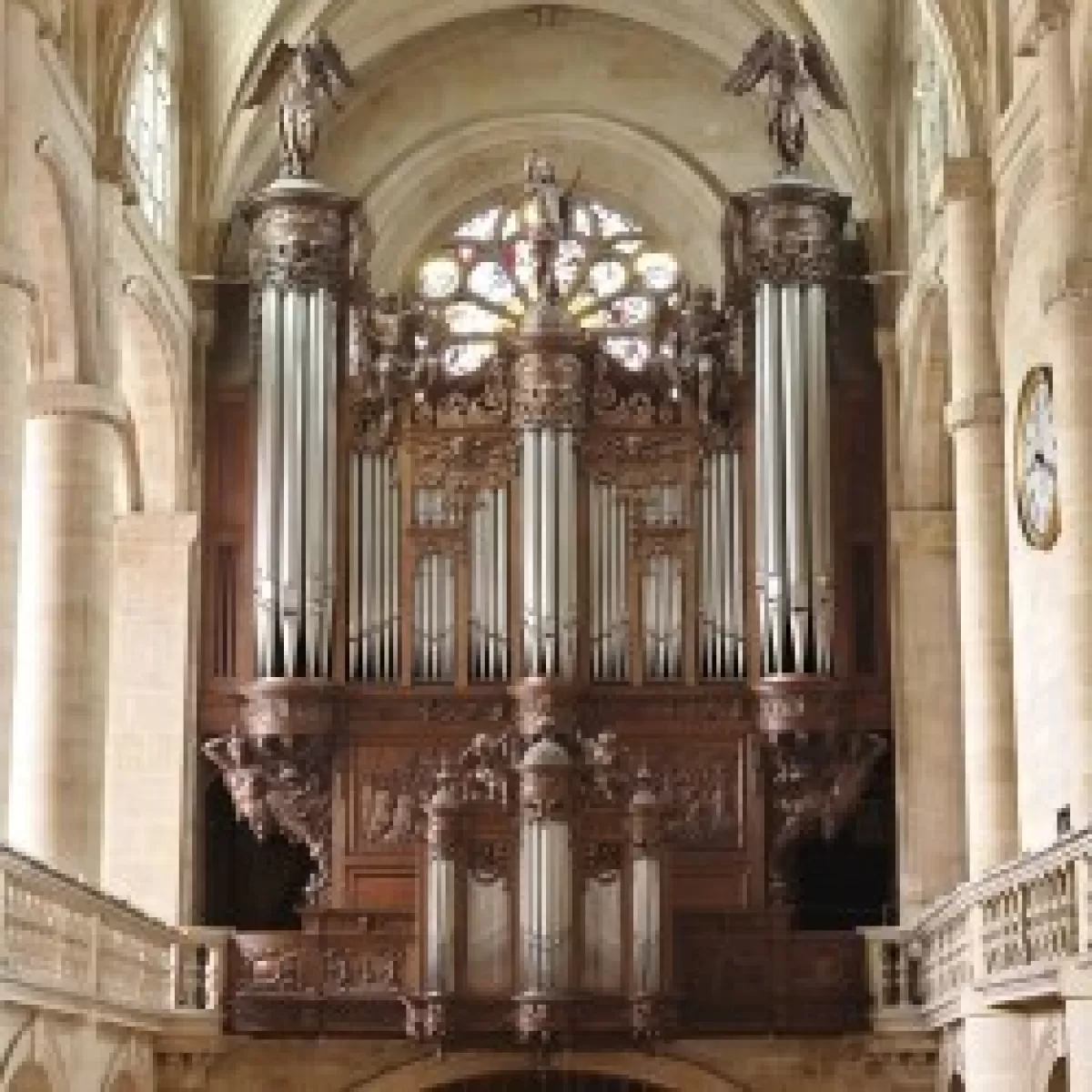 The influence of the composer-organists Tournemire and Vierne can be heard in Duruflé’s own music. From Tournemire Duruflé developed a strong interest in plainsong and modal harmony, and from Vierne a knowledge of the organ’s many sonic capabilities and an understanding of form and scale in musical composition. Duruflé later paid homage to his esteemed teachers by publishing valuable transcriptions of their recorded organ improvisations. Duruflé was appointed deputy organist under Vierne at Notre-Dame Cathedral in 1927, and Vierne wanted the younger man to succeed him in the post of principal organist there. However, Duruflé accepted the post of organist of St Étienne-du-Mont in Paris, a position he would retain the rest of his professional life, until 1975. From 1943 to 1970 he also served as professor of harmony at the Paris Conservatoire. In addition to his composition and teaching, and work as a church organist, he also toured extensively as an organ soloist, including to the United States. He also made recordings, including one as the organ soloist in Francis Poulenc’s Organ Concerto, which he had premiered in 1939 (he advised Poulenc on organ registration). Duruflé also conducted his choral works on tour, including a performance of the Requiem given in Los Angeles in 1971, arranged by the distinguished choral conductor Paul Salamunovich (1927-2014), Music Director of the Los Angeles Master Chorale (1991-2001). Salamunovich was a strong champion of the French composer’s work, in Southern California and throughout the nation.
Duruflé was not a prolific composer, and was self-critical of his own works, which he frequently revised. Indeed, he was quoted as saying “I work slowly, and I throw a lot away.” Besides his frequently performed Requiem, his Four Motets of 1960 is a standard set in the choral repertory; each of the four Latin-texted motets is based on Gregorian chant. Duruflé understood the nature and importance of liturgical plainchant and he imbued his music with both an evocation and quotation of chant such that it may be difficult for listeners to discern where the chant voices stop and the composer’s own melodies begin. Duruflé succinctly summarized his intention: “As a general rule, I have above all tried to feel deeply the particular style of the Gregorian themes: and I have done my best to reconcile as far as possible the Gregorian rhythmic patterns, as fixed by the Benedictines of Solesmes, with the demands of the modern bar-structure.”
Duruflé’s Requiem, dedicated to the composer’s father, was originally commissioned in 1941, completed in 1947, and the premiere broadcast on French national radio on All Souls Day, November 2, 1947. This work is a cantus firmus (“fixed melody”) mass setting, in that it quotes directly from the original chant melodies for the liturgical Latin mass for the dead, and it alternates between bold direct statements of the plainchant sources, and more subtle, chant-embedded textures. Duruflé’s nine-movement Requiem is noted for its use of block chords moving in parallel motion, suggesting the music of Claude Debussy and Maurice Ravel, as well as for his use of dominant ninth chords, his masterful orchestration that suggests the variety of sounds created by a multitude of organ registrations, and a sensitive text-music relationship.
The Introit (first movement) sets the words from which the work’s title derive—“Requiem aeternam, dona eis Domine” (Eternal rest, grant them, O Lord)—with a direct quotation of the original chant melody. This is followed by the Kyrie (Lord Have Mercy) movement that presents canonic and contrapuntal settings of the text. The dramatic Domine Jesu Christe (Lord Jesus Christ) movement, the Offertory, invokes the sharp human cries for salvation and liberation from the punishments of hell. The fearful ask the standard-bearer St. Michael to bring them back into the holy light.
With its continuous quick-note organ accompaniment under a slower-moving text, the Sanctus (Holy, Holy, Holy Lord), the fourth movement, undulates like a wave until it explodes into a grand fortissimo high point, tapering off gradually to a gentle ending. The Pie Jesu (Blessed Jesus), the fifth and central movement of the nine, scored for solo mezzo soprano, solo cello, and organ, beautifully reflects the composer’s identification with human suffering with its petition to Jesus to grant the faithful eternal rest. The subdued Agnus Dei (Lamb of God) movement is followed by the Lux aeterna (Eternal Light), with its shifting meters that capture the stress accentuation of the chant text.
In the penultimate movement, the Libera me (Deliver Me, Lord), the tremendous events of the Day of Judgement are foretold in solo baritone and choral utterances. As the composer tells us, the In Paradisum (In Paradise) movement marks the “ultimate answer of Faith to all the questions by the flight of the soul to Paradise.” This last movement begins startlingly with unfolding ethereal chords sustained in the organ part supporting a meltingly beautiful soprano section line on the petition “May the angels receive them in Paradise,” which is answered by the angelic chorus.